
India will be informing Sri Lanka about an official working with the Pakistan High Commission in Colombo who was allegedly playing a key role in planning terror strikes at the behest of ISI on the US and Israeli consulates in the southern part of this country.

The American-Pakistani terrorist's deposition will resume on Thursday.

What was the need to fictionalise a series on real events that were far more horrific because they were real? asks Vaihayasi Pande Daniel.

Headley is currently serving 35 years in an American prison after being convicted of being involved in the planning and execution of the Mumbai terrorist attack.
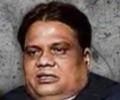
The state police has also requested the government to deploy paramilitary forces around the jail premises for the underworld don's security.

A special Court on Monday allowed the National Investigation Agency's plea seeking its permission to conduct polygraph test on suspected Lashkar-e-Tayiba operative Showkat Ahmed Bhat, arrested in connection with Udhampur terror attack case.

Testifying before a Mumbai court for the second day on Tuesday, Pakistani-American terrorist David Coleman Headley said LeT had planned to attack Indian defence scientists at the Taj Mahal Hotel in Mumbai and that he was asked by Pakistan's ISI to recruit Indian armymen to spy for them.

The National Investigation Agency has taken over the probe into the case of alleged hatching of a plot by Pakistan-based terror group to carry out suicide attacks on the US and Israeli consulates in South India.
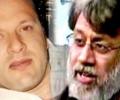
A Delhi court on Monday issued fresh non-bailable warrants against Pakistani-American David Coleman Headley, his accomplice Tahawwur Rana, Lashkar-e-Tayiba founder Hafiz Saeed and 26/11 attack mastermind Zaki-ur-Rehman Lakhvi, who are accused of carrying out terror attacks in New Delhi.
A news report in daily Pakistan Today quoted an unnamed JIT member to say that the attack was nothing but 'vicious propaganda' against Pakistan as Indian authorities did not have any evidence to back their claims.
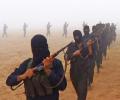
akistani-American David Coleman Headley outline how the Lashkar-e-Tayiba and the Inter-Services Intelligence wanted to spread terror in India.

India plans to provide the probe team from Pakistan access to all witnesses in the Pathankot terror attack case but not security personnel from the National Security Guard or the Border Security Force.

The revelations made by blast mastermind and Indian Mujahideen founder Yasin Bhatkal have helped the agency understand that the case has two angles to it -- the first being the blend between Indian and Pakistani operatives and secondly the Maharashtra Anti-Terrorist Squad being wrong from day one of the probe.

What distinguishes 26/11 from other bombings in big cities, for instance 9/11 in New York or 7/7 in London, is that it remains the best-documented attack in a digitally enhanced world, says Sunil Sethi

It said the prime minister of Pakistan has neither chosen to condemn the heinous act nor condoled with the bereaved families.
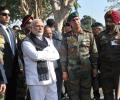
'The attack on the Pathankot base constituted an act of war. Yet Modi's only public comment up until now on that attack has been to blame it on "enemies of humanity".' 'Modi came to power talking tough about Pakistan. But in office, he has pursued a Pakistan policy that has lost both direction and purpose,' argues Brahma Chellaney.

What India has failed to acknowledge is that sub-conventional war is the name of the game and irregular forces have emerged with greater strategic value over conventional and even nuclear forces, and reliance purely on conventional force and diplomacy is grossly inadequate, says Lt Gen Prakash Katoch (retired).
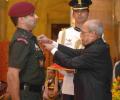
'India showcased its ability to launch multiple Special Forces strikes simultaneously across a well defended front.' 'Through these strikes Pakistan was given a glimpse of the full range of India's military capabilities,' says Brigadier Gurmeet Kanwal (retd).

National Investigation Agency officials said that Salvinder Singh, his jeweller friend Rajesh Verma and cook Madan Gopal have been summoned for a routine questioning as the agency is preparing to receive a five-member Special Investigation Team from Pakistan on March 27.

Government will probe the findings in a book on the 26/11 Mumbai terror attacks which claims that a "super- agent" code-named 'Honey Bee' in the Indian establishment had helped Pakistan's ISI in identifying the landing site for the terrorists.
A Delhi court has issued fresh non-bailable warrants against Pakistani-American David Coleman Headley, his accomplice Tahawwur Rana, lashkar-e-Tayiba founder Hafiz Saeed and 26/11 attack mastermind Zaki-ur-Rehman Lakhvi, who are accused of carrying out several terror attacks in India.

Raising questions over the role of Pakistan's powerful military in the Pathankot terror attack, a former ambassador to India has said that the army does not appreciate Prime Minister Nawaz Sharif's attempts to decide on the country's policy towards India.

'There is a consensus within the Indian security establishment -- at least among those who draw their conclusions from data instead of speaking from nationalist sentiment -- that India lacks the offensive capability to defeat Pakistan in a short war.'
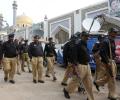
Pakistan had reportedly launched 'strikes' against militant bases in Afghanistan on Saturday.

The Parliamentary Standing Committee on home in its report, which was tabled in the Rajya Sabha on Wednesday, took stock of overall performance of ministry of home affairs.

A hunt has been launched for a businessman who is alleged to have paid money to Mohammed Naved Yakub, a Pakistani terrorist who was caught alive last week after the Udhampur terror strike in which two Border Security Force personnel were killed.

'It's a matter of great pride that no student of Army Goodwill Schools has ever joined terrorism.'

Lashkar-e-Tayiba and the Al Qaeda were convinced that 26/11 attack masterminds Hafiz Saeed and Zakiur Rehman would face only "superficial" action from the Pakistani authorities and within months plans were afoot for another terror strike in India, Pakistani-American terrorist David Coleman Headley said on Saturday.

'This is a movie made with this gaze fixed on its immediate well-wishers, while at the same time it squints hard looking for those swaying back and forth on the fence,' notes Rohit Sathish Nair.

Terror operative Abu Jundal's trial on December 9 is likely to open a new war of words, for his claims on another LeT operative Sajid Mir, who, Jundal has claimed that was a 'khaas aadmi' of the ISI. Vicky Nanjappa reports

'Despite its noble attempts, tight editing, terrific sound design, good performances and a compelling story, Hotel Mumbai tells a big lie.'

The lie detector test on Naved, who is in NIA custody till August 24, be carried out at 11 am on Tuesday at the Central Forensic Science Laboratory in CGO complex, after his interrogators claimed he was lying on many accounts.
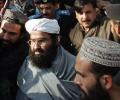
'Jaish is known for its fidayeen activities.' 'This well trained human resource backed by military-based training makes the JeM an obvious choice over the LeT and HM.'

'India can replicate what Pakistan did to Kulbhushan Jadhav should the need arise.' 'Hopefully, Pakistan will see reason before that transpires,' says Ambassador G Parthasarathy, former high commissioner to Pakistan.
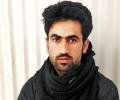
Abdul Rehman, a resident of Pakistan-occupied Kashmir, had infiltrated in January and was engaged in recruiting local youth for "suicide" attacks, the army said.
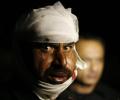
The death toll in the horrific suicide attack that shook Pakistan minutes after the popular flag-lowering ceremony at Wagah climbed to 61 on Monday. Security agencies have arrested about 20 suspects from the Indo-Pak border area.

Taking a swipe at the prime minister, Shinde said Modi used to say that UPA ministers were serving biryani to Pakistani leaders but what is happening now.

In a significant claim, Pakistani-American terrorist David Coleman Headley on Thursday said that Ishrat Jahan -- who was killed in an alleged fake encounter in 2004 in Gujarat --was actually a suicide bomber of Lashkar-e-Tayiba terror outfit.

Pakistan-based Lashkar-e-Tayiba's technology chief had posed as an Indian businessman while negotiating to buy from an American company a Voice-over-Internet Phone service that was later used by the LeT handlers to communicate with 26/11 attackers while concealing their actual origin.

The Lashkar-e-Tayiba operative also revealed about his training while he deposed in front of a Mumbai court via video link.
